Lake Titicaca Homestay: A Cultural Experience in Community, Tradition, and Simplicity
A Night on Lake Titicaca: What a Homestay in Peru Taught Me About Community, Simplicity,
and Belonging. Some of the most profound travel experiences don’t come from luxury hotels or curated
itineraries.
They come from being invited into someone’s home.
My homestay on Lake Titicaca, organized with Tika Trekking, was one of those experiences —
grounding, humbling, and unforgettable.
Life on the Reeds: Islas Flotantes de los Uros
Our journey began on the Islas Flotantes de los Uros, specifically the island community of Sol y
Luna.
The moment we stepped off the boat, it felt like entering another world.
The entire island is built from reeds —
the ground beneath your feet, the homes, the boats — all woven by hand from the same
material pulled from the lake.
And yes — they even eat the reeds.
We were invited to try them, tasting something that has sustained this community for
generations. It was such a small act, yet deeply symbolic — nourishment coming directly from
the land and water that surround them.
The homes were humble:
* A bed
* A few carefully folded articles of clothing
* Pottery dishes used daily
Nothing excess. Nothing wasted.
And yet, the warmth was overwhelming.
Tradition Worn with Pride
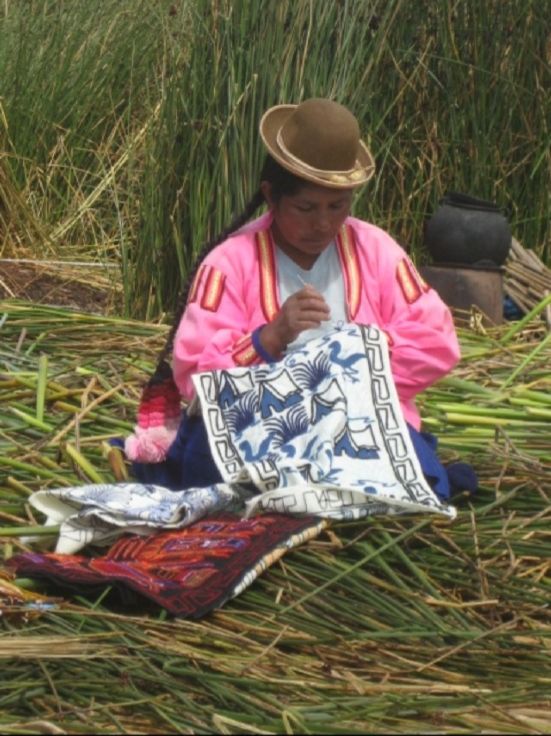
The women wore traditional dress bursting with color — layered skirts in vibrant reds, blues,
and pinks, paired with beautifully embroidered blouses and shawls.
Every detail told a story:
* Colors indicating community and identity
* Hand-crafted garments worn daily, not saved for ceremony
* Clothing passed down, not replaced
From the Floating Islands to Quechua Life
We continued on to a Quechua Island, where the rhythm of life felt equally intentional.
Here, the pace slowed even more.
Gardens, textiles, daily routines — everything centered around community and continuity. It
was clear that knowledge is passed through doing, not explaining.
Amantaní: Where the Earth Provides
Our homestay for the night was on Amantaní Island, at Villa Orinojón.
Stone paths wound between low rock walls and simple homes. The island is entirely self-
sustaining — a living example of balance.
There were:
* Sheep grazing nearby
* Terraced gardens everywhere you looked
* Families tending crops together
Food here is grown, harvested, and shared — not bought.
The Hike, the Storm, and the Lesson
We hiked to the highest point on the island, surrounded by sweeping lake views and endless
sky.
Halfway up, the weather shifted suddenly.
A powerful rainstorm rolled in — cold, wild, unapologetic.
And we kept going.
Our local guide smiled, unfazed, and taught us a simple ritual:
Rub eucalyptus leaves between your palms, breathe deeply.
The effect was immediate — clear airways, sharp focus, a sense of renewal.
A natural reset, straight from the land.
That trek we were laughing together, sharing stories, bridging cultures without words.
Sleeping Under Wool and Waking with Gratitude
That night, our room had open windows and no heat. The cold crept in quickly after sunset.
The family handed us heavy wool blankets, hand-woven and thick — the kind that feel like
protection, not decoration.
Dinner was a traditional soup, cooked slowly and served with care. Nourishing, warming, and
deeply comforting.
They invited us to try the clothing on — not as a performance, but as a gesture of inclusion. A
reminder that tradition here is lived, not displayed.**What I Took Home**
I was able to purchase two alpaca sweaters, handmade by the family. Not souvenirs —
heirlooms of time, skill, and tradition.
But what I truly carried home was something deeper.
I learned:
* How communities thrive without excess
* How tradition is preserved through participation
* How kindness doesn’t need a shared language
* How wealth can exist without material abundance
They opened their homes — and their hearts — without hesitation.
Why This Experience Mattered
This homestay reminded me that luxury doesn’t always mean comfort.
Sometimes it means:
* Being trusted
* Being welcomed
* Being changed
Travel like this doesn’t just show you the world — it teaches you how others live within it.
And that lesson stays with you far longer than any itinerary.
Life on the Reeds: Visiting the Floating Islands of the Uros
The floating islands of the Uros don’t announce themselves loudly.
There’s no grand entrance. No spectacle.
Just a quiet shift in perspective the moment you realize the ground beneath your feet is alive —
woven from reeds, layered and rebuilt by hand, floating gently on the waters of Lake Titicaca.
We visited Isla Flotante Los Uros – Sol y Luna, and what struck me most wasn’t how different
life looked — but how intentional it felt.
Everything on the island is made from reeds:
The islands themselves.
The homes.
The boats.
And yes — even the food.
The reeds are harvested, dried, layered, replaced, and respected. Nothing is wasted. Nothing is
excess. This isn’t a novelty — it’s survival, sustainability, and tradition intertwined.
We were invited to taste the reeds — a small gesture that carried so much meaning. Food here
isn’t separate from the environment. It is the environment.
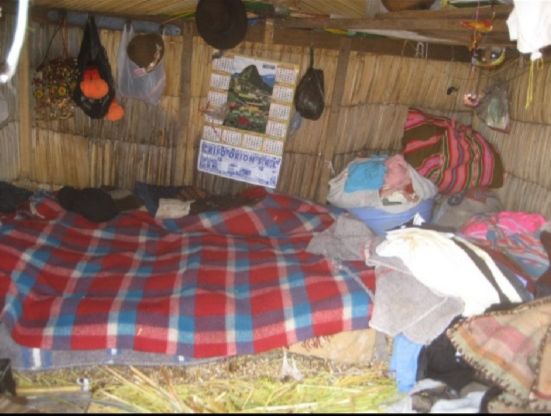
The homes were humble:
A single bed.
A few pieces of clothing.
Pottery dishes used daily.
And yet the welcome was warm, generous, and deeply human.
What stayed with me was how naturally responsibility is woven into daily life here. Children
grow up understanding contribution — not because they’re told, but because it’s visible
everywhere.
The Uros don’t float above the lake to escape the world.
They float because they’ve learned how to live with it.
In many places, traditional clothing is reserved for performances.
In Peru, it’s worn with purpose.
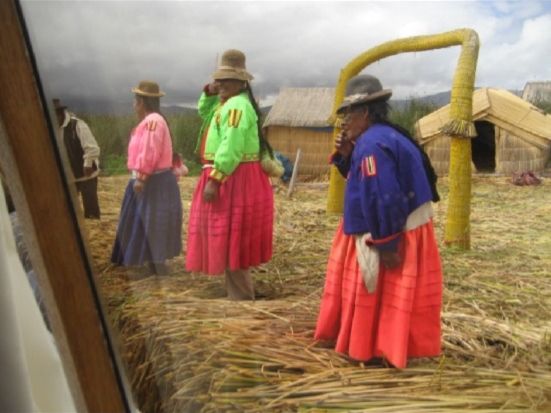
On the islands of Lake Titicaca, vibrant skirts, embroidered blouses, and colorful shawls aren’t
costumes — they’re expressions of identity passed down through generations.
The colors are intentional.
The layers are practical.
The garments tell stories.
We were invited to try on traditional clothing — not as tourists, but as guests.
There was no rush. No cameras first. Just laughter, adjustment, and care.
The women helped us wrap skirts properly, showed us how the shawls were worn, and
explained which pieces were for warmth, which for work, which for ceremony.
What struck me most was the pride.
These garments aren’t worn to preserve the past — they’re worn because they belong to the
present.
In a world that constantly pushes uniformity, seeing tradition worn daily — without explanation
or apology — was powerful.
It reminded me that culture doesn’t survive by being displayed.
It survives by being lived.

What Traditional Dress Taught Me About Identity and Pride in Peru
In many places, traditional clothing is reserved for performances.
In Peru, it’s worn with purpose.
On the islands of Lake Titicaca, vibrant skirts, embroidered blouses, and colorful shawls aren’t
costumes — they’re expressions of identity passed down through generations.
The colors are intentional.
The layers are practical.
The garments tell stories.
We were invited to try on traditional clothing — not as tourists, but as guests.
There was no rush. No cameras first. Just laughter, adjustment, and care.
The women helped us wrap skirts properly, showed us how the shawls were worn, and
explained which pieces were for warmth, which for work, which for ceremony.
What struck me most was the pride.
These garments aren’t worn to preserve the past — they’re worn because they belong to the
present.
In a world that constantly pushes uniformity, seeing tradition worn daily — without explanation
or apology — was powerful.
It reminded me that culture doesn’t survive by being displayed.
It survives by being lived.
Sleeping Cold, Eating Soup, and Learning What Comfort Really Means on Amantaní Island
Our night on Amantaní Island stripped comfort down to its essentials.
Our room at Villa Orinojón had open windows and no heat. As the sun set, the cold crept in
quickly — sharp, honest, unavoidable.
And then came the blankets.
Heavy, hand-woven wool blankets layered carefully over the bed. The kind that feel protective
rather than decorative.
Dinner was a traditional soup — slow-cooked, nourishing, deeply warming. No menu. No
choices. Just food prepared with intention.
Comfort here didn’t come from temperature control or convenience.
It came from care.
From knowing someone thought about how you’d feel when the night grew cold.
From being fed something that had sustained families long before you arrived.
That night, I slept deeply — not despite the cold, but because of the quiet.
Because comfort isn’t always about what you have.
Sometimes it’s about how you’re held.

A Storm on the Mountain: What a Rain-Soaked Hike Taught Me About Resilience
We set out for the highest point on Amantaní Island under clear skies.
Halfway up, everything changed.
The wind picked up. The clouds rolled in. And then the rain came — sudden, cold, relentless.
There was no shelter. No shortcut back.
So we kept going.
Our local guide moved calmly, unbothered by the storm. At one point, he stopped, pulled
eucalyptus leaves from his pocket, and showed us how to rub them between our palms.
“Breathe,” he said.
The scent cut through the cold instantly. Our airways cleared. Our focus sharpened.
A natural reset — offered without drama.
This wasn’t taught as medicine. It was simply knowledge, passed quietly from one generation
to the next.
The storm didn’t stop us.
It reminded us that resilience isn’t loud.
It isn’t forced.
It’s learned through experience — through moving forward even when conditions aren’t ideal.
What We Take Home: The Stories That Stay Long After the Trip Ends
Before we left, I was able to purchase two alpaca sweaters — handmade by the family who
hosted us.
They weren’t souvenirs.
They were hours of labor. Skill. Tradition.
I didn’t buy them because they were beautiful — though they were.
I bought them because they represented connection.
What I truly carried home, though, can’t be folded or packed.
I brought home lessons:
That community doesn’t require abundance.
That tradition survives through participation.
That kindness doesn’t need translation.
That hospitality can exist without expectation.
They opened their homes without hesitation.
And in doing so, they reminded me that travel — at its best — isn’t about where you go.
It’s about who you allow to change you

